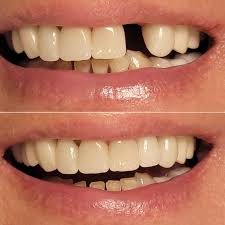
Single Tooth Dental Implant in Dublin €1600.00
Permanent Replacement for One Missing Tooth in Dublin
If you are missing a single tooth, a dental implant is the most reliable, natural-looking, and long-lasting solution available. A single tooth dental implant replaces both the missing tooth and its root, restoring full function while preserving the health of the surrounding teeth and jawbone.
At Dental Implants Ireland, we provide advanced single tooth implant treatment for patients across Ireland, using modern digital planning and high-quality materials to ensure predictable, long-term results.
📞 Call 01 557 7740 to book your consultation
📍 Trusted dental implant care in Ireland
IDC registered dentists with 5-star reviews
Looks Natural, Feels Even Better
NATURAL LOOKING TEETH
replaces DENTURES
BOOSTS CONFIDIENCE
LONG-TERM SOLUTION
- Why Choose A Dental Implant
Benefits Of A Dental Implant
-
Does not damage neighbouring teeth
-
Helps preserve jawbone and prevent bone loss
-
Feels and functions like a natural tooth
-
No risk of movement or slipping
-
Long-term solution with excellent durability
A dental implant is usually the preferred option where bone levels and general oral health allow.
What Is a Single Tooth Dental Implant?
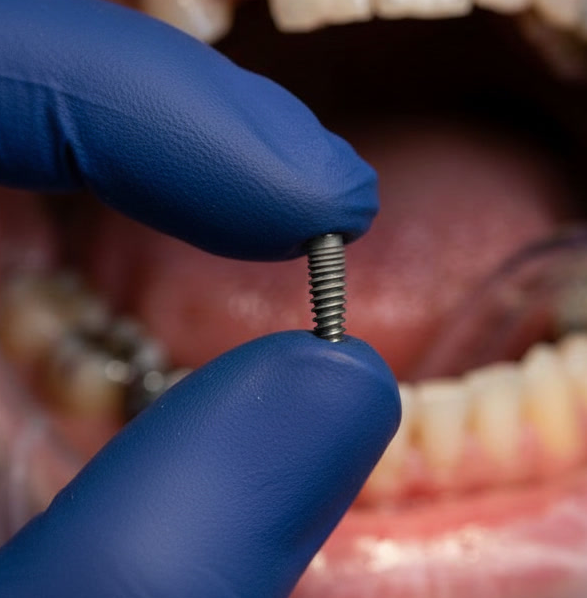
A single tooth dental implant is a small titanium post that is placed into the jawbone to replace the root of a missing tooth. Once healed, the implant supports a custom-made crown that looks, feels, and functions like a natural tooth.
Unlike bridges, a single tooth implant does not require drilling or altering the neighbouring teeth. This makes it the most conservative and biologically sound option for replacing one missing tooth.
A single tooth implant consists of three parts:
-
Dental implant – placed into the jawbone
-
Abutment – connects the implant to the crown
-
Crown – the visible tooth replacement, usually zirconia
What To Expect
From consultation to smile our 4 stages of dental implants treatment
During your consultation, we assess your oral health and discuss treatment options. Patients may choose whether or not to proceed with a 3D CT scan. A full treatment plan and quotation can only be provided once a CT scan has been completed, as this allows accurate assessment and safe planning.
Using digital planning based on 3D CT scan imaging, the implant position is planned in advance. A small titanium implant is then placed into the jawbone to provide a strong and stable foundation.
After placement, the dental implant requires a healing period of several months to allow osseointegration, during which the implant bonds with the jawbone. Ideally, no pressure is placed on the implant during this time to support stable, long-term integration before the final restoration is fitted.
The final stage involves fitting a custom-made dental crown, bridge, or full-arch restoration, completing your treatment and restoring a natural-looking, functional smile.
Dental Implants Ireland Advantage
|
OTHERS |
DENTAL IMPLANTS IRELAND |
|---|---|
|
|
Streamlined care with fewer appointments needed |
Complex referral process |
Single Dental Implant Dentist guiding you from start to finish |
Unclear pricing and hidden charges |
Upfront costs and full pricing transparency |
Standardized solutions |
Personalized treatment plans tailored to your needs |
Book Your Experience
+353 (1) 5577740
OFFICE@DENTAL-IMPLANTS-IRELAND.COM
Dundrum, Dublin 14, Ireland
Am I Suitable For A Dental Implant
Most adults who are missing a single tooth are suitable candidates for dental implant treatment. Suitability depends on several factors, which are carefully assessed during your consultation.
You may be suitable if:
You have healthy gums
You have sufficient jawbone (or are suitable for augmentation)
You are in good general health
You do not smoke heavily, or are willing to stop during healing
If bone levels are insufficient, additional treatments such as bone grafting may be recommended to support implant placement.
- YOUR QUESTIONS, ANSWERED
Frequently Asked Questions
A dental implant is a long-term solution for replacing a missing tooth. The implant itself is a small titanium screw placed into the jawbone where the tooth is missing. After healing, a post (abutment) is attached to the implant, followed by a custom-made zirconia crown. Together, these components replace the missing tooth or teeth in both function and appearance — this complete restoration is commonly referred to as a dental implant.
Our dental implant dentist will carry out a comprehensive dental assessment to determine if dental implants are suitable for you. This includes a full oral examination and, where chosen, a 3D CT scan, which allows the dentist to assess bone volume, jaw structure, and implant positioning. CT imaging helps confirm whether there is sufficient bone to support a dental implant safely and accurately.
Once your suitabity is ascertained by the dental implant dentist the next step will be to choose the correct type and size of implant you require. When Replacing a Single Tooth, a single implant, single post and single crown will replace the missing tooth.
Your dental implant will provide you with several distinct benefits when compared to a dental bridge. Not only does it look and function like a natural tooth, the dental implant has no impact on the teeth either side of the space unlike a dental bridge. When having a bridge placed it is common for the dentist to ground down the healthy teeth either side of the space to support the cemented bridge.
Your dental implant will also replace the root that is missing from the tooth that is not there. This is healthier for your bone surrounding the missing tooth area. When you have a dental bridge placed it is common for the bone under the bridge to deteriorate.Your dental implant will integrate with the jawbone which will in turn keep the bone healthy and intact.Your dental implant will also be much easier to keep clean as against a dental bridge which can cause the gums to recede leaving a visible sign possibly even exposing the base of the dental bridge.
Yes, there are different types of dental implant treatments. The most common dental implant is a titanium screw implant, which is placed into the jawbone to replace the root of a missing tooth. A single implant can support one replacement tooth, or multiple implants can be placed to support a fixed dental bridge.
In suitable cases, placing several implants to support a bridge can reduce the overall number of implants required, which may lower the total cost of treatment. Your dental implant dentist will advise on the most appropriate option based on your oral health, bone levels, and treatment goals.
All implant treatment is carried out by IDC-registered dentists in accordance with professional standards set by the Irish Dental Council.
Not everyone is suitable for dental implants. The ideal dental implant patient is generally in good overall health and has healthy teeth and gums. Adequate jawbone is required to support the implant, and the gums should be healthy and free from active gum disease (periodontitis).
Certain medical conditions — such as diabetes, heart conditions, or the use of blood-thinning medication — may affect suitability for dental implant surgery. These factors do not automatically rule out treatment, but they require careful assessment and planning.
Dental implant placement is a surgical procedure, so thorough pre-treatment assessment and planning is essential. For this reason, implant treatment should only be carried out by a dentist with appropriate training and experience. At our clinic, all implant assessments and treatments are provided by IDC-registered dentists, in line with professional standards set by the Irish Dental Council.
Your dentist will assess your oral health, medical history, and diagnostic scans to determine whether dental implants are a suitable option for you.
The dental implant procedure is carried out in stages and is carefully planned for each individual patient.
Step One – Implant Placement
A titanium dental implant, shaped like a small screw, is placed into the jawbone in the area of the missing tooth. Over the following several months, the implant bonds with the surrounding bone through a process called osseointegration, creating a strong and stable anchor. During this healing phase, a temporary tooth replacement may be provided where appropriate.
Many dentists use one-stage dental implant systems, which allow the implant to heal without the need for a second surgical procedure to place a healing cap at a later date.
Final Step – Restoration
Once healing is complete, a custom-made zirconia crown is attached to the implant via a small connecting post called an abutment. This final restoration replaces the missing tooth in both appearance and function. Patients often notice improved chewing and speech, and many quickly forget they have an implant at all.
Every dental implant case is different. Suitability, timing, and treatment approach are determined following a full clinical examination and diagnostic assessment, ensuring the treatment is appropriate for your individual needs.
Frequent clinic visits for checkups
Streamlined care with fewer appointments needed